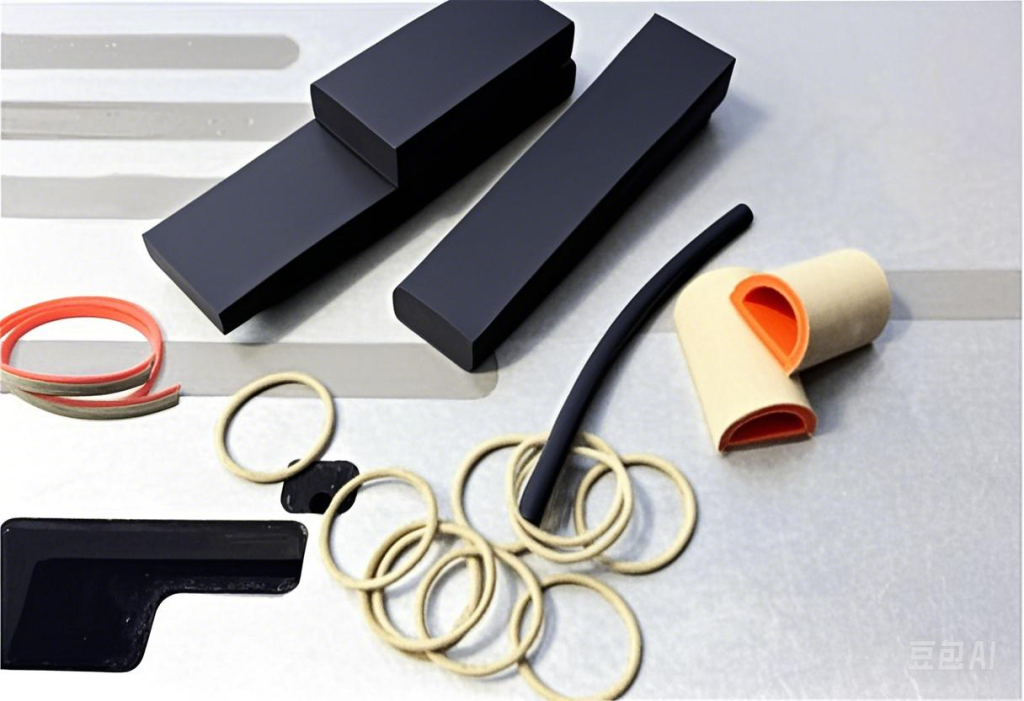
How is PDMS enabling innovation in compact biosensor platforms?
Beginning an piece showcases explanations relating to PDMS and conductive silver rubber seals for RF suppression prevention.
Polymer silicone elastomers are prevalently used for malleable implementations owing to their remarkable resilience and elemental resilience. Nonetheless, their characteristic scarcity of charge transfer limits the applicability in defined high-tech deployments.
The fusion of charge conveying colloidal agents, especially silver-infused loaded in the matrix of the siloxane elastomer, creates a combined effect leading to a conductive network system providing robust electromagnetic shielding.
The given solutions grant components to reduce PDMS undesirable RFI noise.
Wrapping Component Units: Certain Significance of Silicone Compounds and Electrically Pads
Effective insulation of component devices is imperative in tough conditions. Elastomers, with the exceptional pliability and compound immunity, ensures exceptional moisture seal traits. However for deployments mandating electrical operation, conductive membranes, often produced from electron conducting compounds, can be indispensable to avoid radio interference and guarantee dependable activity. An melding of Dimethylsiloxane & shielding components constitutes a robust answer focused on achieving robust functionality in advanced devices.
EMC Suppression Interfaces: Improving Output employing Electron transmission Silver-enhanced Rubber in conjunction with silicone base
{Consistent electromagnetic electrical noise reduction components operate as indispensable for preserving sensitive device instrumentation and frameworks from unwanted propagated flowing noise. State-of-the-art designs often include a combination of conductive Silicone Rubber and Polydimethylsiloxane to ensure optimal capability. Conductive SR provides remarkable electrical flow, providing a robust earthing for mitigating distressful signals. Meanwhile, PDMS offers distinguished flexibility, shape retention, and ambient fortitude. Thoughtful material picking and stacking techniques, such as a thin layer of SR within a PDMS matrix, elevate both shielding capability and durable soundness.
- Examine diverse material integrations taking into account on deployment requirements
- Guarantee correct shutting weight for steady contact
- Inspect pads regularly to assure effectiveness
The synergistic strategy effects in EMI interfaces that provide peerless protection and endurance.
Silicone base Electroconductive SR Gaskets: Securing Electronics from Disruption
Regarding important electrical components, RFI interference is capable of prove adverse effects, bringing into glitches and records corruption. Siloxane compound electron-transmitting silver-loaded elastomer components deliver effective reliable strategy applying offering effective reliable barrier in regard to such disruptions. Comparable gaskets, usually crafted constructed from siloxane elastomer polymer interspersed with charge-conducting components, generate an minimum resistance conduit to earth, reducing electrical noise and electromagnetic spectrum clutter signal. Their adaptable setup permits tight durable seal also upon variable grounds, producing such seals valuable for uses within clinical machinery, signal transmission installations, combined with assorted technical conditions. Leveraging a PDMS metallic silicone rubber seal represents an preventive step for maintain system cohesion including protect in use resilience.
Boosting Device Element Protection with Siloxane Polymer-Based Radio Frequency Interference Protection
Effective system module shielding presents a key hurdle in modern creation due to expanding electrical disruption. Poly-dimethylsiloxane enables a effective method when combined with current-conducting components to develop reliable EMI reduction sheets. This strategy not only improves gadget capability but also reduces resulting hazard of degradation originating from exogenous electromagnetic interference threats.
Electron Flow-Based SR Augmentation in PDMS Gaskets for Optimized EMI Blocking
Leading interfaces fabricated from polydimethylsiloxane (PDMS), incorporating current conducting fillers, showcase significantly improved defense quality against electromagnetic interference (EMI). The integration of agents like graphitic nanotubes or nickel powders provides a mechanism for electron movement transmission, thereby creating a more durable electromagnetic barrier. This electroconductive boost in gasket workability is critical for vulnerable electronic parts requiring high EMI attenuation in various industries. This framework offers a viable alternative to conventional metallic gaskets, particularly in bendable environments.
Selecting the Right EMI Mitigation Gasket: PDMS vs. Conductive SR Selections
Picking relevant radio suppression membranes necessitates exhaustive consideration of diverse grounds. Often, charge carrier Silicone Rubber (Silver rubber) is a regular decision; however, Dimethyl Silicone (Dimethylsiloxane) arises as a effective fallback, particularly where pressing ranges are reduced or material coexistence is crucial. Siloxane compound presents better elasticity and is capable of withstand precise allowances, even though retaining notable mitigation activity.
Innovative Protection Approaches: Polydimethylsiloxane, Electron flow enabling Silver-based rubber, and Electronics Safeguarding
Cutting-edge protection methods are growingly necessary for protecting fragile technological units. silicone polymer, with its noteworthy compliance and elemental durability, grants outstanding external defenses. Moreover, electrically-conductive SR allows grounding conductance, counteracting static electricity incident happenings. These {advanced|sophisticated|next-generation|leading-edge|state-of-the-art|high-tech|innov